
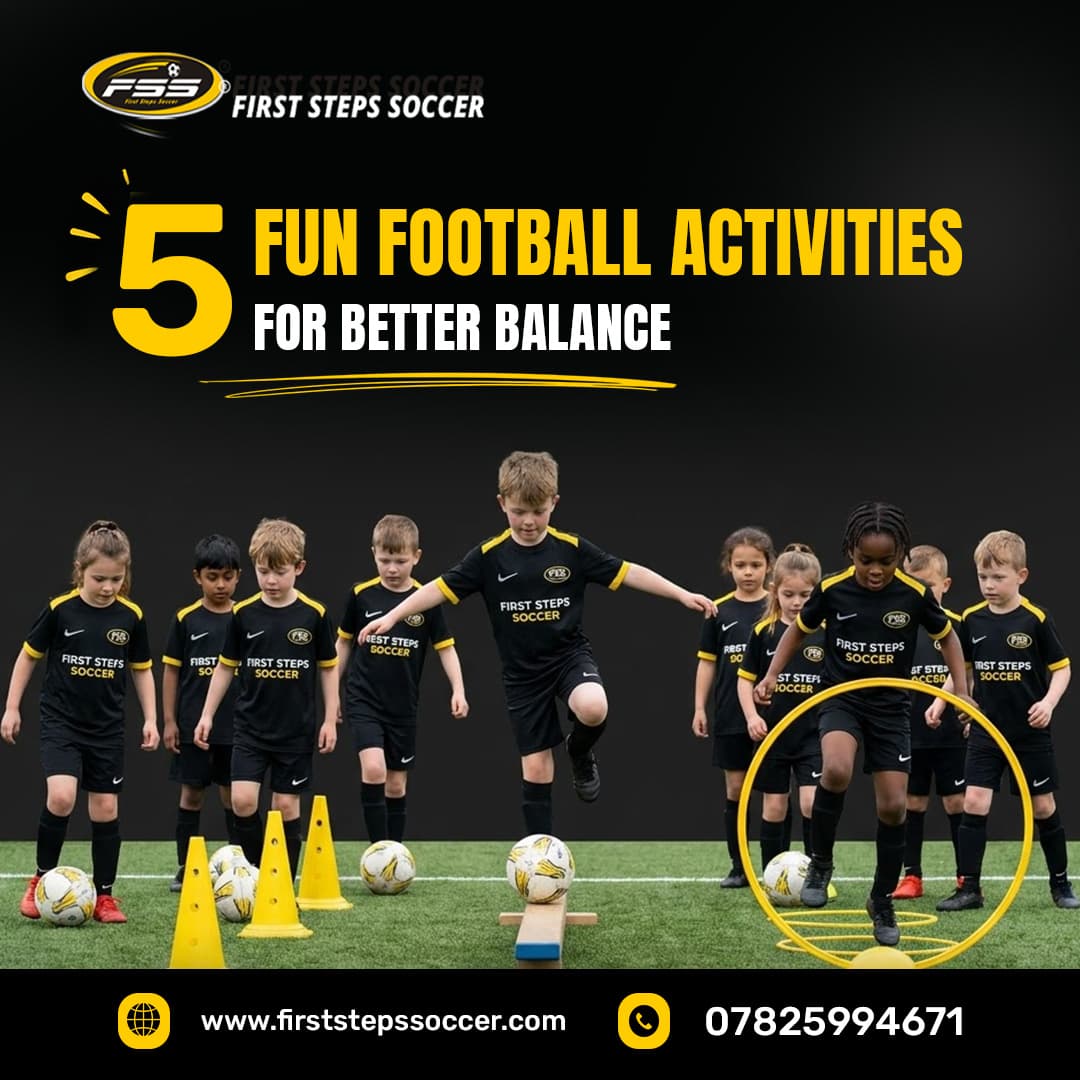
UK guidance asks children aged one to five to build up at least 180 minutes of physical activity across the day. That does not mean your three-year-old needs three hours of coaching. Running, climbing, chasing and playing all count.
That point matters whether you are searching for kids football coaching in Bristol or simply playing in the garden.
The same idea works with a football. At this age, children do not build balance by standing still and trying not to wobble. They build coordination through movement, especially when they have to adjust what their body does. They also need chances to have another go.
That is why simple games beat long drills for this age group. England Football also puts play at the centre of its approach for children aged four to six. Perfect technique is not the goal. Children need enjoyable ways to move while getting plenty of touches on the ball.
1. Stop-and-Go Dribbling Builds Control While Moving
Start with a ball and a small space. Let your child move the ball around with their feet, then call “stop”. They freeze the ball, pause, then start again on your signal.
The game makes them slow down under control. They also have to settle the ball before moving off again. Try “green” for go and “red” for stop if they enjoy pretend play.
Make Stopping the Ball Part of the Challenge
Encourage your child to stop the ball with the sole or inside of the foot. Do not worry about a wobble. The useful part comes when they shift their weight and find control again.
When Speed Makes the Activity Less Useful
Young children often want to race. That can turn the game into a chase. Keep the first few goes slow enough for small touches. Once your child can stop the ball under control, you can bring in a little more pace.
2. Cone Weaving Teaches Children to Shift Their Weight
Set out a few cones, toys or safe markers in a line. Your child can then move the ball around them in any way that works. Each turn asks them to change direction, move their feet and keep the ball close.
Do not expect a neat slalom. A young child may miss a marker or take a wide turn. The adjustment matters more than the perfect route.
Change the Course Instead of Adding More Instructions
If the game feels hard, move the markers further apart. If it feels easy, bring them closer or curve the route. Changing the space often works better than adding more rules. Your child gets more room to find the answer through movement.
3. Ball Rolls Develop Balance One Foot at a Time
Put one foot lightly on top of the ball and show your child how to roll it sideways. Then let them have a go before swapping feet. Each roll asks one leg to support the body while the other foot moves the ball. You can make it playful by rolling the ball between two pretend “parking spaces”.
Wobbles Are Part of Learning the Movement
A wobble does not mean the activity has failed. Children learn by making small corrections. They may step off the ball, lose it or use their arms to steady themselves.
Give them time to work it out. First Steps Soccer’s guidance for children aged two to five also puts movement and play at the heart of learning. It encourages adults to give children room to make mistakes rather than correcting every attempt.
4. Gate Dribbling Adds Decisions to Physical Coordination
Set out several little gates with pairs of cones or other safe objects. Leave enough space between them for your child to choose where to go next. Now let them dribble through whichever gate they want. They must control the ball, find space and change direction.
Why Looking Up Changes the Difficulty
Young children naturally spend plenty of time watching the ball. As confidence grows, encourage a quick glance up to find the next gate. Do not demand constant scanning. One quick look adds a useful decision without turning the game into a test.
5. Mini Football Obstacle Courses: Join the Skills Together
Create a short route with familiar objects. Your child might dribble around a cone, stop the ball, step over a marker, turn and finish with a shot. This brings changes of speed, balance and ball control into one playful sequence.
Keep the Course Short Enough to Stay Playful
Three or four actions give a young child plenty to do. A long route can turn play into an instruction exercise. If your child forgets what comes next, simplify it. The best course is the one they want to try again.
Progress the Movement Before Increasing the Speed
Do not use “faster” as your first way to make the game harder. Try a smaller space, a sharper turn or an occasional touch with the foot they use less often. These changes keep the challenge on control. Racing often rewards finishing quickly instead.
When you compare junior football coaching Bristol programmes, the same principle gives you a useful test. Look for activities that make movement more challenging without making speed the main goal.
Closing Insight
Children aged two to five build balance and coordination while they move. Let them stop, turn, wobble, recover and have another go. A simple football game can teach more than a perfect drill when your child wants to keep playing.